
Why Choose Durrie Vision?

Myopia (Nearsightedness)
What is myopia?
Patients with myopia are unable to see objects at a distance. The National Eye Institute estimates that 41% of the population is affected by myopia, making it one of the most common refractive errors.
How we treat myopia
We offer five vision correction procedures to address nearsightedness without glasses or contact lenses.
Hyperopia (Farsightedness)
What is hyperopia?
This condition makes it challenging to see up close. You may experience eye strain, computer vision syndrome, or eye fatigue when reading, using a tablet, or working at your desk.
How we treat hyperopia
You don’t have to rely on glasses or contact lenses to see up close.


Presbyopia
What is presbyopia?
As you age, your eye lens loses its flexibility and begins to stiffen, leading to difficulty focusing on close-up objects. Presbyopia is a primary reason why people require bifocals or reading glasses.
How we treat presbyopia
Refractive lens exchange and refractive cataract surgery are excellent solutions to treat age-related farsightedness with superior intraocular lens (IOL) technology.
Astigmatism
What is astigmatism?
Your cornea’s shape affects your ability to see. A typical cornea shape is spherical, but if you have astigmatism, it may look more egg-shaped, which causes blurry vision up close and far away.
How we treat astigmatism
Astigmatism has nothing on our vision correction procedures, which directly address this condition.


Cataracts
What are cataracts?
Cataracts form as proteins break down in your eyes’ natural lenses, causing clouded, yellowed, or blurred vision when light attempts to pass through the lens.
How we treat cataracts
Replace your clouded lens with new intraocular lenses (IOLs), including premium IOLs that eliminate your dependence on glasses or contacts. Our office-based procedure goes beyond basic cataract surgery, so you can experience the full benefits of IOLs. Get both eyes treated on the same day, along with options to fine-tune your vision after surgery with LASIK or UV light.
Treat Your Eyes to Our State-of-the-Art Solutions
Our treatment options help you see your world differently without relying on glasses or contact lenses. Find out if you’re a candidate for one of our procedures by scheduling a free consultation.
Don’t just take our word for it!
Schedule a Free Consultation
During your free consultation visit, you will meet with an experienced refractive surgeon who will discuss your results along with a custom recommendation for treatment.
Take the LASIK Eligibility Assessment
Are you a candidate for laser vision correction? Let’s find out. Take our 60-second online test to see what procedure might be the best option for your vision and lifestyle.
From The Experts At Durrie Vision
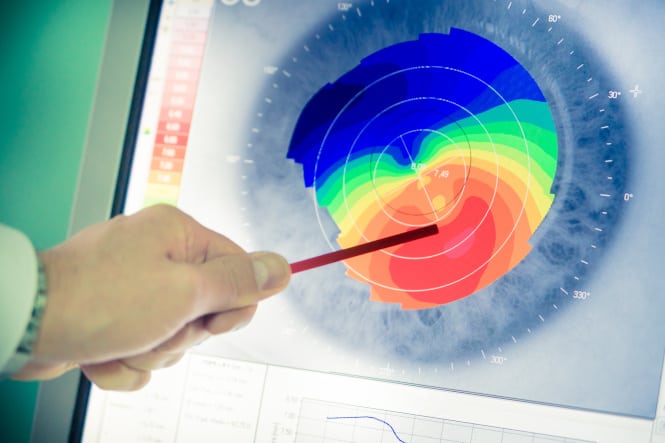
What is Keratoconus, and Can Laser Vision Correction Help?
Find Out Whether You’re a Candidate for Cross-Linking at Durrie Vision in Overland Park, Kansas Vision correction patients cite many reasons for undergoing LASIK surgery and other vision procedures to improve their eyesight. But for people with keratoconus, laser...
Which Laser Vision Correction Procedure Is Right for My Refractive Error?
Our Kansas City Eye Surgeons Will Officially Determine Your Candidacy Through an Advanced Ocular Analysis Of people in the United States with vision impairments, 80 percent are caused by a refractive error. And if you have difficulty seeing without glasses or...

What Happens During Your Three-Month Follow-Up Appointment After LASIK Surgery Near Kansas City?
For Most People, It’s the Last Visit After Recovering from Laser Vision Correction Jen, a patient at Durrie Vision, underwent our SBK Advanced LASIK procedure on January 7, 2022. This is part two of her personal story about her experience with laser vision correction...